
 by
by 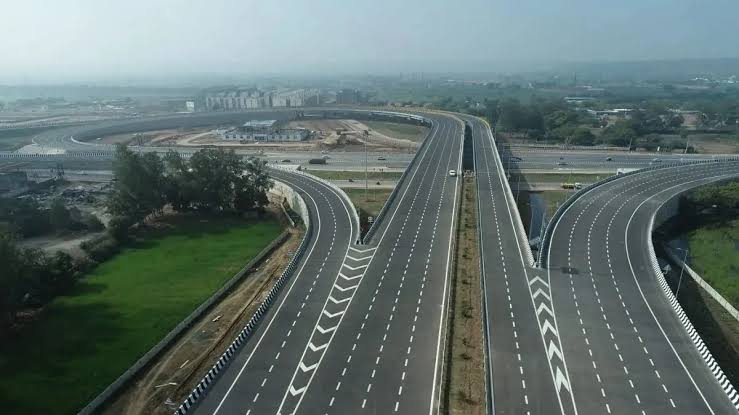
Contents
Toggle🚧 3-Lane Elevated Corridor Planned on Delhi-Gurgaon Highway to Ease Traffic Congestion
A proposed 2-km elevated corridor between Delhi’s Shiv Murti and the Haryana border near Ambience Mall could provide a major traffic-management solution for commuters travelling between Delhi and Gurugram.
Traffic congestion on the Delhi-Gurgaon corridor has long been a challenge for daily commuters, particularly around Shiv Murti, Rangpuri, Rajokri Flyover and the Ambience Mall stretch. With traffic volumes continuing to increase on NH-48 and the Dwarka Expressway becoming an increasingly important connectivity route, authorities are exploring a new infrastructure intervention.
According to the article provided, the National Highways Authority of India (NHAI) is planning a three-lane elevated corridor of approximately 2 km to reduce congestion between Delhi’s Shiv Murti and the Haryana border near Ambience Mall.
🛣️ What Is the Proposed Elevated Corridor?
The proposed project is designed as a three-lane elevated road on a single-pier configuration, running parallel to the existing Rajokri Flyover.
The corridor is planned to begin near the right-turn tunnel of the Dwarka Expressway interchange around Rangpuri, with traffic emerging from the underpass being directed onto the elevated section.
Rather than merging this traffic directly with the already busy NH-48 carriageway, the proposed elevated road would create a separate traffic stream.
This approach is particularly important because the existing NH-48 experiences heavy traffic pressure despite having a substantial main carriageway and service roads.
📍 Key Highlights of the Proposal
- Length: Approximately 2 km
- Configuration: 3-lane elevated corridor
- Location: Delhi-Gurugram corridor
- Starting Point: Near the Dwarka Expressway interchange/right-turn tunnel around Rangpuri
- Direction: Towards Gurugram
- Proposed Route: Parallel to the existing Rajokri Flyover
- Major Objective: Reduce congestion and separate traffic flows
🚦 Why Is This Corridor Necessary?
The Delhi-Gurugram route has evolved into one of the busiest urban transport corridors in the National Capital Region.
Traffic travelling towards Gurugram does not come exclusively from Delhi. Vehicles from Noida, Ghaziabad, Greater Noida and several parts of Delhi converge towards the Shiv Murti area before entering the millennium city.
This creates a significant bottleneck.
The problem becomes particularly visible around the Shiv Murti and Ambience Mall stretches, where traffic from different routes converges and competes for limited road capacity.
The existing service roads also have limited capacity. When vehicles queue on these roads, the resulting tailback can spill onto NH-48, creating a cascading effect that extends congestion towards Shiv Murti.
🚘 How the 3-Lane Elevated Road Could Improve Traffic Flow
One of the most important aspects of the proposal is traffic segregation.
Traffic emerging from the Dwarka Expressway interchange would not simply merge into the already congested NH-48 carriageway. Instead, it would be directed onto the proposed elevated corridor.
This creates an additional, dedicated traffic movement path.
The proposed system could therefore work in three ways:
1️⃣ Separating Dwarka Expressway Traffic
The elevated road would accommodate traffic coming from the Dwarka Expressway, preventing this traffic from immediately adding pressure to the existing NH-48 carriageway.
2️⃣ Reducing Merging Conflicts
A major cause of congestion on busy urban highways is repeated merging and lane-changing. By creating a separate route for a portion of the traffic, the project could potentially reduce these conflicts.
3️⃣ Improving Movement Towards Gurugram
The elevated corridor would continue across the Haryana border and come down opposite Ambience Mall, providing a more direct movement path towards Gurugram.
🏙️ What Does It Mean for the Shiv Murti Stretch–Ambience Mall?
The section between Shiv Murti and Ambience Mall is particularly significant because it acts as a convergence point for traffic entering Gurugram.
Vehicles heading towards destinations such as:
- Cyber City
- Udyog Vihar
- Ambience Mall
- Gurugram’s commercial districts
- Residential sectors along the Delhi-Gurugram corridor
could benefit indirectly if congestion around this section is reduced.
However, the effectiveness of the project will ultimately depend on how efficiently traffic is distributed between the elevated corridor, NH-48 and the existing service roads.
🌐 Dwarka Expressway’s Growing Role in NCR Connectivity
The proposal also highlights the growing importance of the Dwarka Expressway in the NCR’s transportation network.
As the expressway connects traffic from Delhi with Gurugram and surrounding areas, the number of vehicles approaching the Delhi-Gurugram corridor from this direction is expected to remain significant.
Infrastructure projects such as the proposed elevated corridor are therefore becoming increasingly important for managing traffic generated by multiple interconnected road networks.
Instead of treating each road independently, the larger challenge is to create an integrated traffic system where highways, expressways, flyovers, tunnels and service roads work together.
🏡 Potential Impact on Gurugram Real Estate
From a real estate perspective, improved road infrastructure can have implications beyond simply reducing travel time.
Connectivity is one of the important factors influencing residential and commercial real estate demand in Gurugram.
Better connectivity between Delhi, Dwarka Expressway, NH-48, Cyber City and major commercial hubs can make surrounding locations more accessible to both residents and businesses.
Areas benefiting from improved connectivity may become more attractive because accessibility influences:
- 🚗 Daily commuting
- 👨💼 Employee mobility
- 🏢 Commercial activity
- 🏠 Rental demand
- 📍 Residential preferences
- 💼 Business accessibility
- 📈 Long-term development potential
That said, it is important to distinguish between a proposed infrastructure project and a completed project.
Real estate decisions should not be based solely on an announced road project. Investors and homebuyers should also evaluate current connectivity, project timelines, surrounding infrastructure and actual on-ground development.
🌆 A Bigger Infrastructure Picture for Gurugram
The proposed elevated corridor is not an isolated development.
Gurugram’s infrastructure landscape is undergoing a broader transformation, with major roads and expressways increasingly being developed to accommodate the city’s expanding residential, commercial and employment ecosystem.
The Dwarka Expressway, NH-48, Southern Peripheral Road and other major corridors collectively form an increasingly interconnected network around Gurugram.
As the city’s population and economic activity grow, traffic management will require more than simply widening existing roads. Grade-separated infrastructure, dedicated corridors and better traffic segregation can play an important role in improving the efficiency of the overall network.
🚙 What Commuters Can Expect
If implemented as proposed, the elevated corridor could provide an alternative movement path for traffic coming from the Dwarka Expressway towards Gurugram.
The biggest potential benefit would be around the Rangpuri–Rajokri–Shiv Murti–Ambience Mall corridor, where traffic volumes are particularly high.
📝 Conclusion
The proposed 2-km, three-lane elevated corridor represents an important attempt to address one of the persistent traffic bottlenecks between Delhi and Gurugram.
By directing traffic emerging from the Dwarka Expressway onto a dedicated elevated route instead of adding it directly to the existing NH-48 traffic stream, the project aims to improve traffic segregation and reduce congestion around the Rangpuri, Rajokri, Shiv Murti and Ambience Mall stretches.
For Gurugram, the significance goes beyond commuting. Efficient transportation infrastructure can strengthen the city’s connection with Delhi and other parts of the NCR while supporting the continued growth of its residential and commercial markets.
As Gurugram continues to expand, projects that improve the movement of people and vehicles will remain a key factor shaping the city’s future development and real estate landscape.




Join The Discussion